




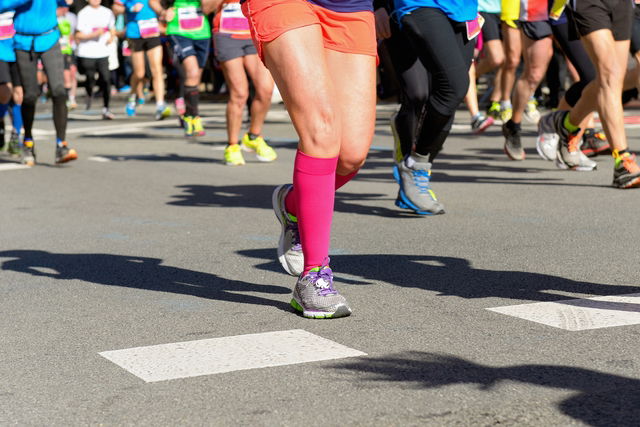
Compression socks for running are usually tall socks that reach the knee and offer progressive compression. They can be used to promote optimal blood circulation, increase muscle strength and reduce fatigue.
They are suitable for anyone who performs long workouts or runs intense races. However, they should not be used for every training session, as persistent use can reduce the muscle's ability to adapt to high impact activity.
Compression socks can be prescribed by your doctor if you have been diagnosed with a circulation disorder, as they can improve circulation and oxygen flow.
Health benefits
Compression socks for running are used to:
- Increase muscle strength and endurance, reducing the risk of injuries and improving performance;
- Reduce muscle fatigue;
- Increase blood circulation and oxygen flow
- Accelerate the lactate degradation process, preventing the muscle from becoming too sore after training.
Compression socks can be used for long and intense runs, as guided by a doctor, physiotherapist or personal trainer.
How they work
The benefits of compression socks are made possible due to the positioning of their elastic fibers. Fibers are are arranged longitudinally and transversely, which keeps the compression even and prevents the muscle from shaking or oscillating too much during exercise. Compression can help to reduce the vibration in the muscles caused by impacts, which can contribute to muscle wear and tear and lead to injuries.
Contraindications for use
Despite having many benefits and improving athletic performance, constant use of compression socks can cause the muscle to lose its adaptive and flexible capacity. Always using compression socks when running can increase the risk for injury when the exercise is done in another environment or if you don't wear the socks.
Furthermore, compression socks are more expensive than regular socks and can cause discomfort or overheating. It is important that the socks provide progressive compression, which means they are tighter at the ankle and a little looser at the knee. This will prevent blisters and skin irritation.
Compression socks for running should be used on an alternating basis, on colder days and, preferably, during longer training sessions or races and when the body is tired or ill.
Also recommended: Beginner Running Plan: 5-Week Guide + Tips to Start Safely tuasaude.com/en/beginner-running-plan