


Ovarian cyst symptoms can include abdominal pain, nausea, vomiting, back pain, and changes in your menstrual cycle. These symptoms may appear when a cyst grows, twists, or ruptures, and can vary in intensity.
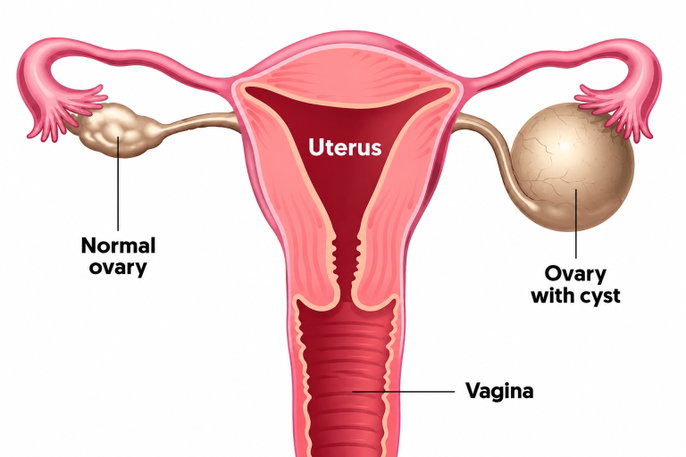
An ovarian cyst is a fluid-filled sac that develops inside or on the surface of the ovary. Other possible symptoms include bloating, irregular periods, and difficulty getting pregnant.
Diagnosis is usually made by a gynecologist using exams and imaging tests like ultrasound or MRI. Treatment depends on the size and type of the cyst, and may include monitoring, medication, or surgery in more serious cases.
Main symptoms
The main ovarian cyst symptoms can include:
- Ovulation pain
- Persistent or intermittent abdominal pain
- Cramping before or during a period
- Bloating
- A delayed or irregular period
- Heavy menstrual bleeding
- Back pain
- Pain or discomfort during sex (dyspareunia)
- Increased breast sensitivity
- Breakthrough bleeding
- Difficulty getting pregnant
- Unexplained weight gain
- Abdominal fullness
- Painful bowel movements
- Increased urinary frequency
Symptoms of ovarian cysts can vary depending on the type and severity, so it is important to see a gynecologist for assessment and testing to determine the correct diagnosis and appropriate management.
Online symptom checker
To help determine whether your symptoms may be related to an ovarian cyst, select all that apply below:
This symptoms quiz is for guidance only and does not replace a gynecologist's assessment or diagnosis.
Confirming a diagnosis
An ovarian cyst diagnosis is usually made by a gynecologist based on symptoms, a physical exam, and abdominal palpation. The doctor may also order imaging tests, such as a transvaginal ultrasound, CT scan, or MRI, to check for a cyst and assess its size and characteristics.
The doctor may also order additional tests, such as a complete blood count (CBC) to check for anemia caused by heavy bleeding, a urine test to rule out a UTI or kidney stones, and a vaginal swab to check for pelvic inflammatory disease. These conditions can cause symptoms similar to an ovarian cyst.
According to the American College of Obstetricians and Gynecologists, ultrasound can help show the cyst’s size, shape, location, and whether it is solid or filled with fluid.
In some cases, a doctor may also order a pregnancy test to rule out an ectopic pregnancy, which can cause similar symptoms. A CA-125 blood test may also be requested to help identify the type of ovarian cyst.
Treatment options
Treatment for an ovarian cyst depends on the cyst’s size and characteristics, as well as the person’s age and symptoms.
If the cyst does not appear to be cancerous and is not causing symptoms, the gynecologist may recommend regular monitoring. According to the NHS, many ovarian cysts disappear after a few months, and a follow-up ultrasound may be used to confirm whether the cyst has resolved.
If symptoms are present, the doctor may prescribe birth control pills with estrogen and progesterone to help regulate hormone levels. In some cases, surgery may be recommended to remove the cyst. In more serious cases, such as ovarian torsion or suspected cancer, the affected ovary may need to be removed.